
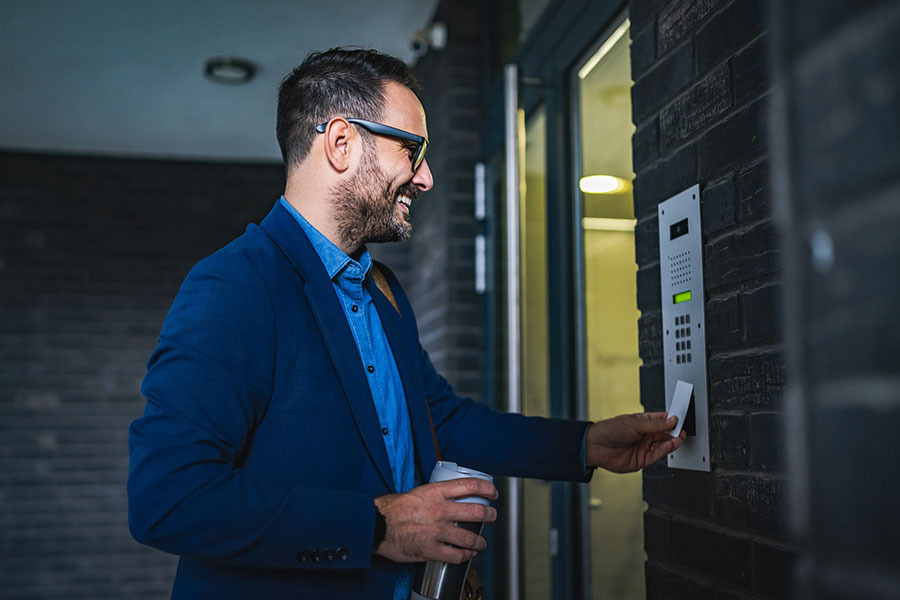

When it comes to protecting your business, few things are more critical than securing your office entrances and exits. These points of access are your first line of defence against unauthorized entry, theft, and other threats to employee safety. By strengthening these areas, you can significantly improve office security, ensure smooth traffic flow, and protect sensitive assets inside your building.
Let’s look at eight proven best practices to secure your building’s entry and exit points using a combination of strategy, personnel, and technology.
1. Install Access Control Systems
Access control systems help ensure that only authorized personnel can enter designated areas of your building. From card readers and biometric scanners to mobile credential systems, these tools add a robust layer of protection.
Card access systems allow you to issue unique credentials to staff, contractors, or approved visitors, while biometric scanners (like fingerprint or facial recognition) reduce the risk of credential sharing. Mobile access, meanwhile, offers contactless convenience via smartphones.
These systems can also be integrated with scheduling software and visitor management platforms to ensure off-hours access is limited and visitor credentials are temporary and trackable.
2. Position Security Guards at Entry Points
The presence of uniformed security guards sends a strong message that your premises are monitored and secure. But their role goes well beyond visual deterrence.
Guards stationed at main entrances help verify identities, check credentials, and intervene if someone attempts to enter without authorization. They’re also trained to identify suspicious behaviour, manage conflicts, and respond quickly to threats.
Their interaction with employees and guests creates a layer of human oversight that enhances access control systems.
3. Use Surveillance Cameras Strategically
Surveillance cameras act as both a deterrent and a tool for accountability. For maximum effectiveness, cameras should be placed near all entrances, exits, and building blind spots.
Live monitoring helps security personnel respond in real time, while recorded footage can be used to investigate incidents and enforce policies. A well-monitored camera system supports investigations of break-ins, workplace incidents, or unauthorized access attempts.
Clear signage indicating camera use also reinforces the message that your premises are under constant watch.
4. Implement Visitor Management Protocols
Visitors should never be able to walk freely into your building. A strong visitor management process includes:
- Requiring guests to sign in at reception
- Recording information in a digital or physical visitor log
- Issuing temporary visitor badges
Digital check-in kiosks or receptionist systems can streamline this process, allowing you to capture visitor photos and track entry/exit times. Paired with access control, this ensures that all guests are accounted for and restricted to permitted areas.
5. Improve Exterior Lighting
Dark entryways and poorly lit building perimeters are common targets for after-hours intrusion. Proper exterior lighting not only discourages trespassers but also improves surveillance camera visibility.
Motion-activated lighting around parking lots, walkways, and entrances keeps these areas well-lit when movement is detected, saving energy while maintaining deterrence. Strong lighting helps guards and employees feel safer during late arrivals or early departures.
6. Install Emergency Exit Alarm Systems
Emergency exits are essential for safety, but they can become security liabilities if misused. Installing alarms on emergency exit doors ensures they are only used during actual emergencies.
These alarms should be integrated into your central security system so staff are alerted when exits are used improperly. Proper signage and regular employee training can also reduce false alarms and reinforce emergency protocols.
7. Restrict Entry Points
The more entry points your office has, the harder it is to monitor them effectively. Consolidating access through a few well-secured doors simplifies security operations.
Limit access to one or two monitored main entrances. Use physical barriers, bollards, or clear signage to funnel visitors and staff through these points. This reduces the number of surveillance zones and helps guards maintain control of foot traffic.
8. Conduct Regular Security Audits
No office security system should remain static. Routine audits help identify gaps and ensure equipment is functional.
Your audit should include:
- Walkthroughs of all access points
- Inspection of surveillance equipment
- Review of access logs
- Tests of alarms and locking systems
Look for patterns in unauthorized access attempts, propped doors, or unmonitored blind spots. These audits allow you to stay ahead of potential threats by proactively upgrading or adjusting your security protocols.
Common Office Security Vulnerabilities to Avoid
Even with good systems in place, small oversights can undermine your efforts. Here are some common mistakes:
- Propping open doors: This defeats the purpose of access control. Use door sensors or install auto-closing hinges.
- Failure to deactivate former employee credentials: Access should be revoked immediately upon termination.
- No cameras at side/rear entrances: These are often entry points for intruders. Ensure they’re monitored.
- Ignoring access logs or alerts: Regularly review logs for irregular patterns and respond promptly to alarms.
Correcting these mistakes takes minimal effort but dramatically improves overall building security.
The Role of Security Personnel in Managing Office Access
While technology plays a key role, human oversight is irreplaceable. Security guards manage traffic flow, de-escalate confrontations, and spot irregularities that systems may miss.
They also play a crucial role in responding to incidents like access denial, unauthorized visitors, or emergencies. Guards working in tandem with access control systems create a layered defence strategy that balances automation with rapid response.
Strengthen Office Entrance Security with Smart Design
Physical layout influences how secure your entrances are. Smart design choices include:
- Reinforced doors and locks that resist tampering
- Controlled entry vestibules with dual-door systems for added verification
- Bollards or barriers to prevent unauthorized vehicle access
- Wayfinding signage that clearly directs visitors to the proper entry points
These design elements guide people through secure pathways and make it harder for intruders to exploit unmonitored zones.
Build a Safer Workplace with Proven Office Security Measures
Office entrances and exits are more than functional; they’re critical control points that protect your staff and property. When secured correctly with reliable office security, they discourage intruders, streamline access, and enhance peace of mind across your organization.
Reach out to Empire Security today at 289-432-1628, email us at info@empiresecuritygroup.ca or click here to get in touch online.

Leave a Reply